Chapterhouse, “Pearl”

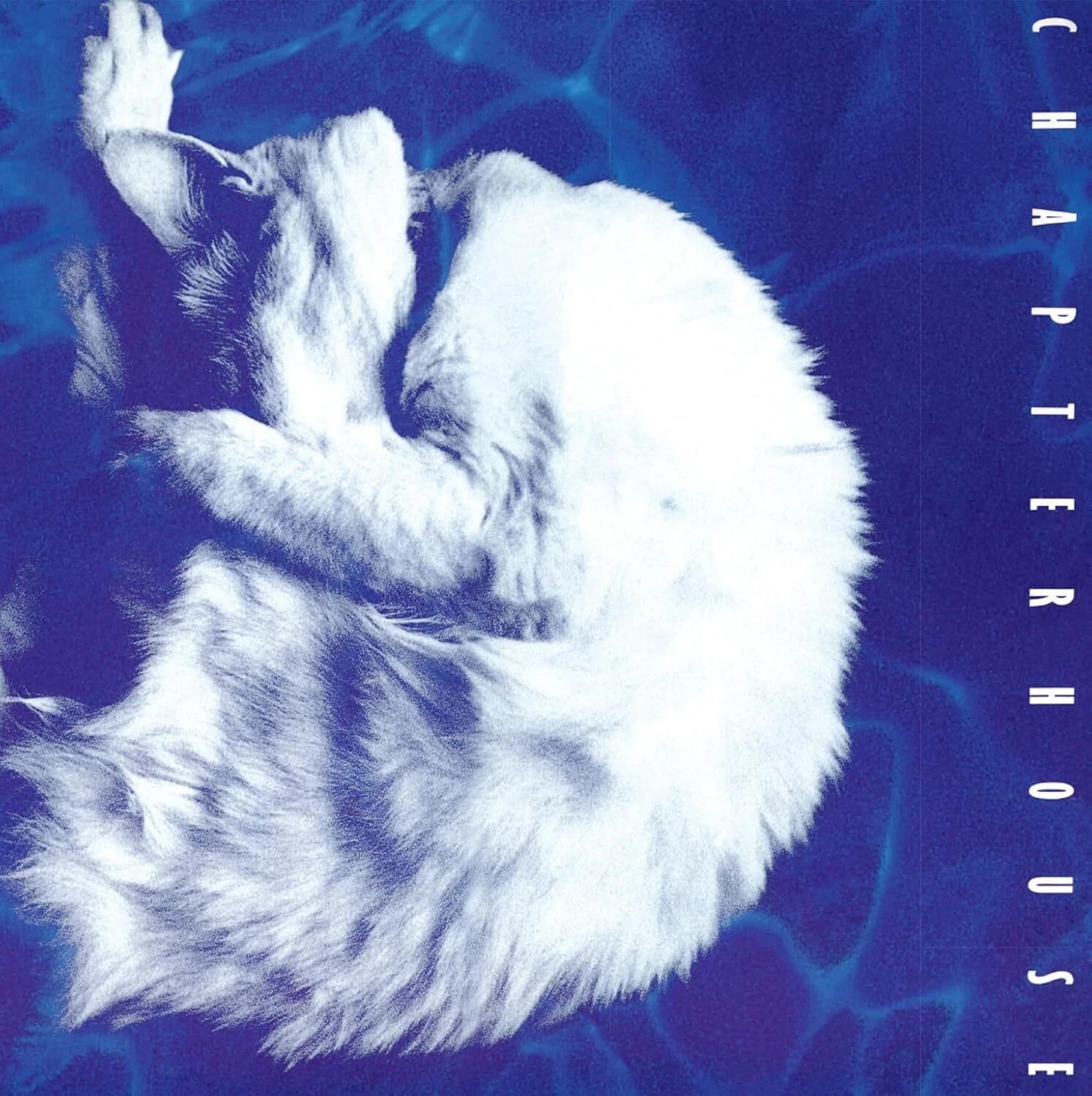
My plan was to follow up my bit on the Inspirals with another Madchester post, maybe kick off a series. But then I saw freaking Chapterhouse the other night—35th anniversary tour for their Whiplash LP—and the Roses are put on hold yet again. Mani, Reni, Ian, and John: I’ll get to you soon, I promise.
Thirty-five years ago I bought Whiplash at the Princeton Record Exchange. I was hoping to stop back in on PREX (as they call it) this weekend, but we had twelve hours in town and I’m increasingly reluctant to drag friends and family—friends, in this instance—with me on my deep dives at record stores, unless they have turntables, too. And even if they do, I tend to outlast the other shoppers in my cohort by at least a half hour. What can I say? I don’t want to miss something—or worse, spend the rest of the day wondering if I did.
In any case, sometime in the fall of 1991 PREX supplied me with a copy of Whiplash on CD. I played that album a ton during my freshman year in college, in between spins of the Jesus & Mary Chain’s Automatic, Never Mind the Bollocks, Here’s the Sex Pistols, PiL’s Greatest Hits So Far (yes: I’d discovered John Lydon), God Fodder by Ned’s Atomic Dustbin, and all the James records I could get my hands on. The Bunnymen record without Ian, Reverberation, was big in my rotation, too. Argue if you want: I’ll defend that record to the death (see “One Million Billionth of a Millisecond on a Sunday Morning”.) I should probably make a playlist from that year. [goes away for ten minutes] In fact, here it is. I’ll likely add to it over time, so hold off judging until I’ve pronounced it a finished product.
Chapterhouse in particular makes me think of my bedroom in 1915 Hall, where I put it to use ushering me into afternoon naps. The sonic overload of this record did some good work drowning out the curses and taunts of my room- and hallmates playing Nintendo steps away in our common room. That said, it speaks to the metabolism, brain hyperactivity, and circadian jackassery of an 18-year-old college student that he could drink three cans of Dr. Pepper, put on a thunderous shoegaze record at 3 PM, and rack out. But this was a regular practice for me, especially in the fall semester, as a result of which I heard the lead tracks on Whirlpool a hell of a lot more than its middle and back end. “Breather” (Apple Music, Spotify), “Pearl” (Apple Music, Spotify), “Autosleeper” (ha: Apple Music, Spotify), and at least the first half of “Treasure” (Apple Music, Spotify), before I ditched the waking world until dinnertime.
I added Whirlpool to my shopping list after I saw the video for “Falling Down” (Apple Music, Spotify) on MTV. The 120 Minutes Archive is increasingly becoming as essential a resource to this Substack as Setlist.fm. Both sites allow me to pin memories to specific dates—and more importantly, to validate and affirm (and sometimes remind and correct) what I only think I remember. The Internet attests that MTV aired the “Falling Down” video on August 25, 1991, right after “Happy” (Apple Music, Spotify) by the aforementioned Ned’s Atomic Dustbin, and just a few minutes before PiL’s “Rise” (Apple Music, Spotify). So that particular summer Sunday night, one of my last before I left for college, informed a fair number of my CD purchases in the months that followed.
Before I go further, I want to emphasize that I wrote that earlier paragraph, calling out Ned’s and Public Image Ltd. as side-riders with Chapterhouse in my 5-CD changer, before I consulted the Internet and found that MTV had clustered these three groups together in a half-hour stretch of programming I most certainly sat and watched. Accordingly, this was not a case of me checking a source and then retconning1 a “memory” that aligned with it. Though I may struggle in this very moment to remember the name of the play-by-play man on the Guardians’ TV broadcast2—I’ve only been listening to him for 25 years—certain associations stick unerrantly with me through the decades. And proving that they do feels rewarding.
Returning to subject …
“Falling Down” had those terrific wah-wah guitar effects. They’ve since been pulled from service, so that I didn’t hear them at the show—my one and only beef with a gig in which Chapterhouse positively rawked. The wah-wahs in “Falling Down” were a siren song to all of us binging on the Madchester scene back in the day. I heard those guitars, clocked the mop tops and baggy shirts in the video, and was properly motivated to buy Whirlpool at the first opportunity. When I did, I found Chapterhouse weren’t very much at all like the Stone Roses, Charlatans, or Inspiral Carpets. The sounds on “Falling Down” were … nonrepresentative. For all that, I quickly grew to appreciate the record for what it was, and unless you count Cocteau Twins’ Heaven or Las Vegas, this would be my first foray into shoegaze.
Of course now I’m putting two and two together and wondering if the band and I were set up. Could a savvy manager/ producer have whispered an instruction to the sound engineer in the Whirlpool sessions: suggest a wah-wah pedal? Maybe Chapterhouse went along to get along, they appeared later for the video shoot, and when shown the finished product were themselves surprised to see all the psychedelic tropes—double exposures, band members falling through space, flowers and feathers and so on. Maybed they asked pointed questions and management told them no no no: this is exactly the right play to reel in all the Roses fans looking for the next “Fools Gold” (Apple Music, Spotify). Fast-forward 35 years, and Chapterhouse have their fan base fairly in the bag. They run their own show now, and they don’t need no steenkeen wah-wahs.
I’ll allow the adjustment. After all, I came for “Falling Down” but I stayed for “Pearl,” a song that is absolutely in the running for My All-Time Favorite Song Ever Ever Ever. Not that I could ever (ever ever) definitively call the question—or stick with an answer for more than a day, if I did. But in simpler times, when I was faced with far fewer songs to sort through and had Billboard rankings more on the brain, I did maintain a practice of selecting not a weekly Personal Top 10, but certainly a #1 Favorite Song. And for the two-year stretch in between designations of “Enola Gay” (Apple Music, Spotify) and “Live Forever” (Apple Music, Spotify), “Pearl” had a firm grip on that top spot.
What did (and do) I like so much about this song? All the lush and desperate Romanticism of it, for starters. With its slow-side-of-midtempo cadence, those whisper-crooned vocals, and themes of love and loss, “Pearl” is a song that burrows ever deeper into your limbic system, the longer it plays. Here I am invoking OMD in consecutive paragraphs, but their “Never Turn Away” (Apple Music, Spotify) and Thompson Twins’ “If You Were Here” (Apple Music, Spotify) apply like means to like ends, inflicting upon the listener (well, this listener) the same kind of pleasurable ache that “Pearl” does. Yet of these three conceptually similar songs, Chapterhouse’s submission is (for me) the sharpest and delivers the cleanest cut.
You wouldn’t expect this from a shoegaze band pitted against two synth-pop acts. A band like Chapterhouse has a propensity to muck and muddy up their mix. And certainly there are several guitar tracks here, alongside probably a dozen more strata of sampling and instrumentation packed and stacked into the Jenga tower—and that’s before we even get to the vocals. Actually … [goes to check] … Google AI tells me the band recorded “Pearl” on 16-track tape, then added 8 more tracks in post-production. All this sounds about right to me, and I won’t trouble myself to confirm that Gemini didn’t hallucinate these facts.
With the caveat that I know exactly zero about sound engineering, I’d venture to say the challenge of producing a shoegaze record is to draw the principal melodies just far enough into the foreground to give them their due, without pulling them too far above the fray. In the latter case you get results like My Bloody Valentine’s “when you sleep” (YouTube) and “i only said” (YouTube), where Kevin Shield’s sculpted feedback samples stand fully apart from the mix and become the full earworm.3 When I first played Loveless I liked these two songs best, because I could access their hooks straightaway and with minimal effort. On subsequent listens these tracks have come to feel … I dunno, a bit gimmicky? I should be clear: I am not opining that Whirlpool is a better record than Loveless. Internet writers get doxxed and destroyed for far lesser provocations. But I will say that the gap between the two records is narrower than you think—and “Pearl” is far and away the best song on either release.
For that last proposition I could stand on ipse dixit, but let’s do at least a few hundred further words on why this song is so terrific. Putting aside the mood, which we’ve already covered, a big chunk of the song’s genius—easily a third share of the pie chart—is owing to the single-bar guitar hook that kicks off the track. This nine-note sequence carries through long stretches of the track and is central to the enterprise: enough that when it (and the beat) drop out of the mix, it feels super-consequential, like seas parting, just to make way for the sung verses. Importantly, too, a second guitar and bass play a four-chord sequence over top of the hook, one chord per bar, to render a simple and exquisite cycle-within-a-cycle effect.
Now let’s talk about the drum samples that comprise this song’s beat layer, because if the strings lift this song from sea level to base camp, it’s the drums that carry “Pearl” to the summit. Sample #1: John Bonham’s delay-treated funk hammer from “When the Levee Breaks” (Apple Music, Spotify). Sample #2: a snare-heavy beat artifact Schoolly D dialed up on a Roland TR-909 for “P.S.K. What Does It Mean?” (Apple Music, Spotify). It takes a genius ear to reach for these two disparate beats—hip hop vs. hard rock, ’80s vs. ’70s, man vs. machine—and stitch them together. Eat your heart out, Norman Cook: these two drum samples integrate perfectly and settle neatly under the strings, so that each of the four elements—high-register hook, chord progression, LedZep, and Schoolly D—contributes equally and distinctly to the production. Fire, air, earth, and water.
“Pearl” was one of three songs I submitted for discussion in our Mixtape Diaries episode about samples (Apple Podcasts, Spotify). The other two were the Beastie Boys’ “Rhymin’ & Stealin’” (Apple Music, Spotify) and “Kiss Them for Me” (Apple Music, Spotify) by Siouxsie and the Banshees. The Beasties use the LedZep beat in “Rhymin’,” and Siouxsie copped from “P.S.K.” for “Kiss Them for Me.” “Pearl” pulled from both and so supplied the connective tissue in a daisy chain of three standout songs with shared drum samples. I’ve gone all of eight paragraphs without citing Public Image Ltd.—that ends now, so I can note that Lydon and his gang also made use of the “P.S.K.” beat in the particular mix of “The Body” (YouTube) that appeared on the hits compilation I bought around the same time as Whirlpool. That Schoolly D beat felt positively ubiquitous back in 1991. Even so I wouldn’t source it until thirty years later, when I was researching a podcast.
Down through the years, “Pearl” still holds up. I would not recommend playing it right on the heels of “When the Levee Breaks,” or for that matter “Rhymin’ & Stealin’.” Chapterhouse sped up the Bonham beat a fair bit, so that when juxtaposed with these sub-80 BPM tracks, “Pearl” comes off as strangely hurried, undercutting the languid Romanticism that gives the song so much of its force. But aside from that there’s never a moment when I wouldn’t benefit from spending 4.5 minutes plugged into this song. I’ll punt for now on the question whether it’s the Best Ever.
The concert was terrific. I can’t remember the last time I saw a shoegaze band play live—it was probably My Bloody Valentine in 2013—and it turns out I was overdue for reminders (1) that shoegaze shows are loud as shit, and (2) that Side B of the Whirlpool record was about as loaded as Side A. For example, “Guilt” (Apple Music, Spotify): there are two brutal instrumental stretches in this song, massive with dissonant guitars and manic thrash-drumming. These jackhammer jams had a habit of, well, redirecting those afternoon naps I described earlier. “If You Want Me” (Apple Music, Spotify) comes next in the running order and is a welcome climbdown in intensity. I can attest that this one was prime mixtape-for-a-girl material: lilting vocal melody backed by glockenspiel, followed by a funky beat drop, followed by a hailstorm of guitars. This song has fewer than 500K hits on Spotify, which is a tragedy. And the deepest cut of all—double-meaning intended—is “April” (Apple Music, Spotify), a stunner of a track I never fully appreciated until I heard it played live. Makes me want to put on a wizard’s cloak, grab Kate, and waltz with her in the rain.
Sometimes a band’s first album is all you need. Not sure why this is. Some A-grade debuts have you desperate to get hold of the follow-up (to be discussed in the over-promised Roses post), whereas others leave you perfectly content. Chapterhouse caught me in between. Blood Music came out in 1993, and I stopped in on PREX multiple times to confirm they still had it in their racks. On easily a half-dozen separate occasions I held it in my hands and never pulled the trigger. This was at least in part because Blood Music came as a 2-CD set, and I was a man of limited means. But I also was just content with Whirlpool, and did I need any more Chapterhouse than was contained in its nine gorgeous tracks?
All this dithering came back to bite me at the show decades later. The mode of proceeding for these all-album gigs is the headliner plays the Chosen Record start to finish in the first set, leaves the stage, then returns to play select hits from their other releases. As I’d never got hold of Blood Music, or for that matter any other Chapterhouse CD, their second set was entirely new to me. All this was just fine, but it was getting late, the Cavs and Knicks were deep into the third quarter, and I was feeling a bit tired. I’d got what I came for in the first set, and in a turn of events I would never have predicted even five months earlier, I had seen The Best Song of All-Time, or at least one from the Top Five—Ten?—hm … let’s ditch the All-Time bit and call it My Undisputed Heavyweight Champion Taking On All Comers from Fall 1991 to Summer 1994—yeah, that’ll do …
I saw that song, played live, by the band that wrote it. Which is pretty goddam great.
Trying on some Gen Z slang here: did I use this word correctly?
Matt Underwood. Duh. When this happens I brute-force my way to remembering. A Google search isn’t just admitting defeat—it’s a concession to early dementia.
Somehow some way Loveless isn’t on the streamers.